The product: Climate-neutral and circular construction of facade panels made from wastewater treatment
Water authority Hoogheemraadschap De Stichtse Rijnlanden is one of the 21 water authorities in the Netherlands. In collaboration with NPSP, it has developed facade panels made from wastewater treatment waste. Schoots Architects designed the panels, which meet strict construction requirements.
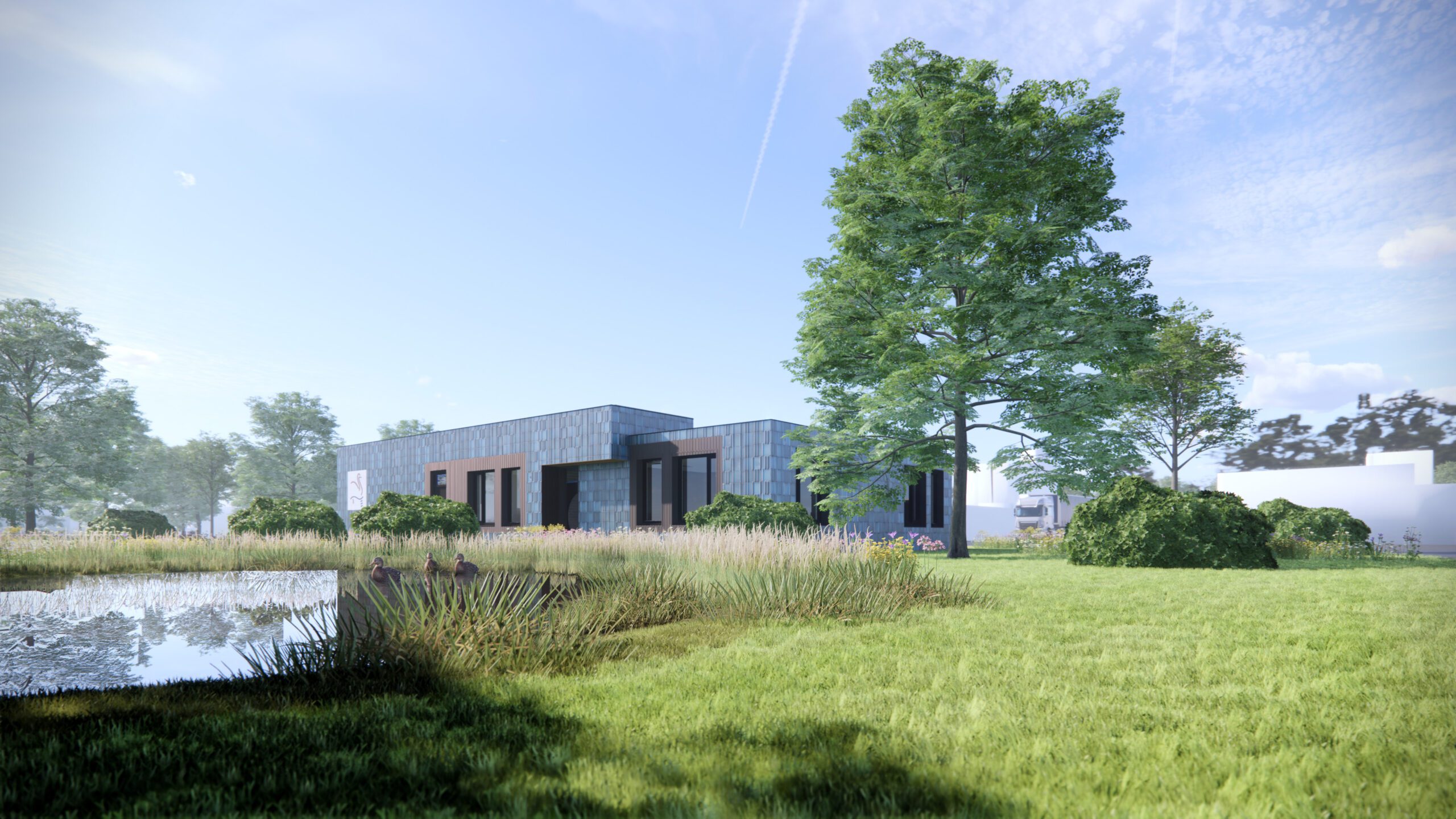
The first building to be clad with these innovative panels is a HDSR business premise in De Meern. This will make the building more sustainable by improving its energy class, and at the same time serve as a circularity showcase, proving the feasibility and added value of sustainable facade cladding.
Image published by Albert van Manen (Project Leader)
My role at NPSP: research and development of the facade panel material
Prototype of the facade panels
During this innovation project, I was leading the research activities with Willem Böttger as advisor. Four (4) different composite fillers were sourced, prototyped and tested, all recovered of waste streams. I formed a criteria list and together with the involved parties we reached a decision. The fibre used is recycled toiler paper. This was pre-selected and a stable parameter to this experimentation.
In collaboration with Jeroen Shoots and using his vision as a guideline, I developed a material collection of eight (8) products, by using different colours and compositions.
The impact of reusing waste materials
Render by Schoots Architects, as seen in Duurzaam ondernemen
Approximately 180,000 tons of toilet paper are spent annually in the Netherlands. Toilet paper contains cellulose, a valuable, biological raw material that is extracted from trees and plants and is the most important component of paper and cardboard. It is also used in construction, for example as insulation material, and in this case as component of the facade panels. Recovering cellulose this way, reduces the need for trees, saves energy and reduces CO2 emissions.
The 200m2 façade in De Meern requires sieved material from 2,000 rolls of toilet paper. This saves 10 tonnes (75%) of CO2 emissions compared to a brick façade.